Jazon is Lyzr's AI agent product for enterprise sales teams, which Lyzr calls an "agentic OS" for the sales function. It runs prospecting, outreach, deal research, CRM updates and pipeline reviews with AI agents. The landing page is written for sales and revenue leaders at large companies.
The Jazon page uses Figtree, a friendly geometric sans, for every heading and paragraph. Every heading stays at a regular 400 weight, so the page never shouts. The hierarchy comes from size: a 64px H1, 48px section titles and 21.6px card titles. Small uppercase labels like "THE ARCHITECTURE" use JetBrains Mono in Lyzr's orange-red. Body text runs at 18 to 20px, which keeps long explanations easy to read.
Element
Size
Weight
Line spacing
H1
64px
400
1.02
H2
48px
400
1.08
H3
21.6px
400
1.25
H4
-
-
-
Paragraph
18px
400
1.6
Headings
Figtree
Paragraph
Figtree
Color
Headings use a soft charcoal, #1F2022, and body text a warm gray, #6B675F. The page sits on a warm off-white, close to #FAFAF8. Lyzr's orange-red, #FE4B1E, marks the "Book a demo" button and the mono labels. Deep color bands change the mood lower down: charcoal for the trust sections, royal blue #053D76 for the final call to action and forest green for the testimonial.
HeadingRGB 31 32 34
ParagraphRGB 107 103 95
Primary ButtonRGB 254 75 30
Hero
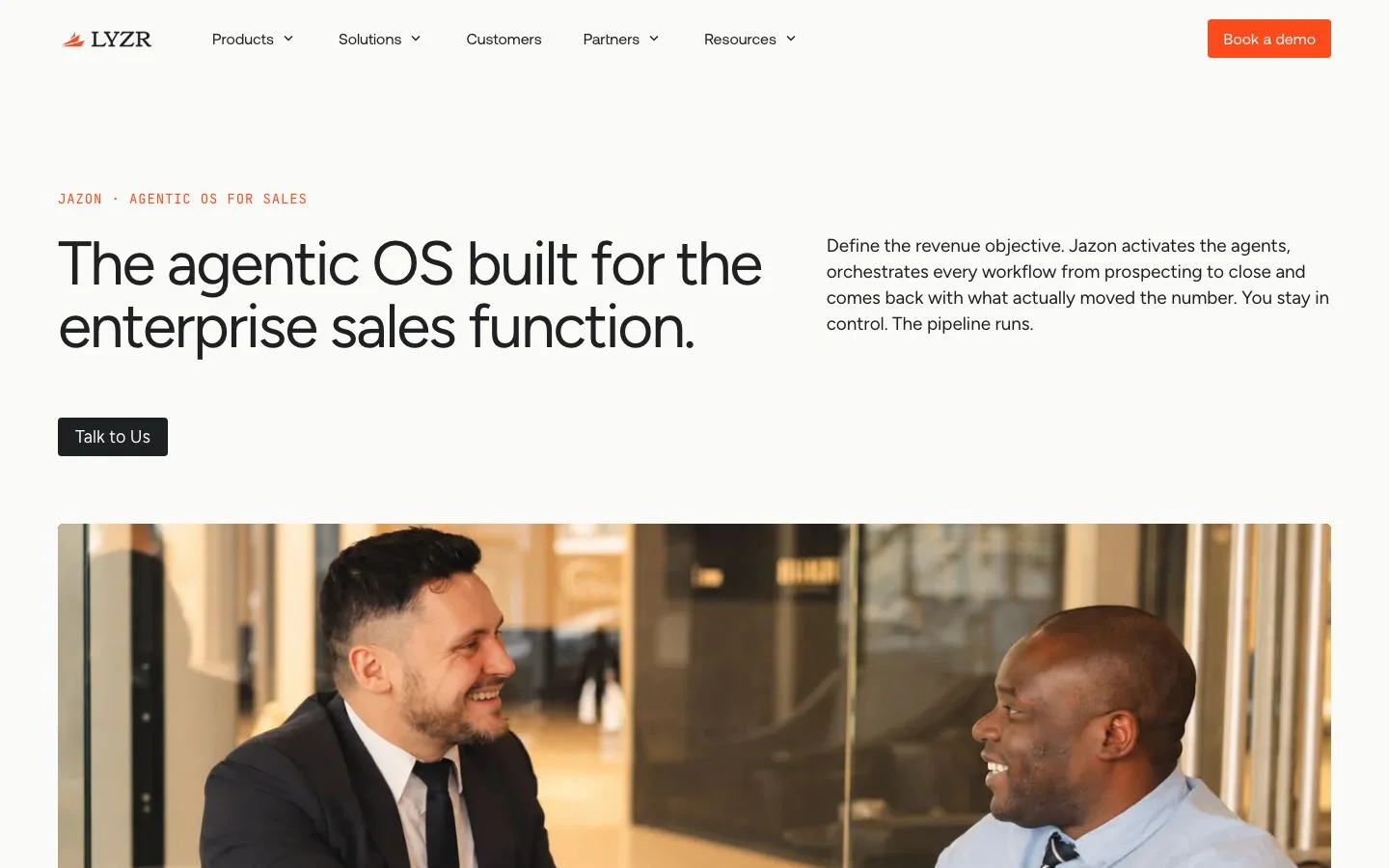
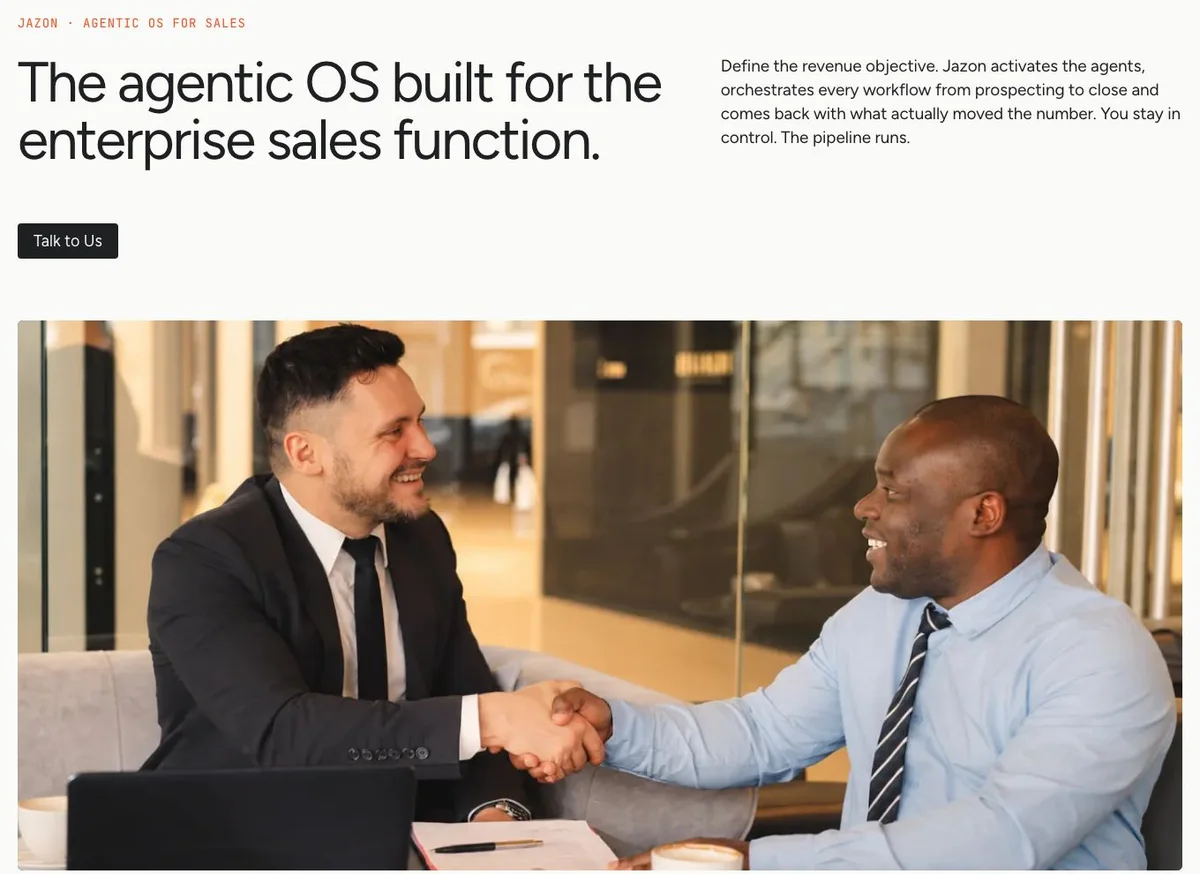
The first screen splits into two columns. On the left, a small orange label reads "JAZON · AGENTIC OS FOR SALES". The 64px headline below it says "The agentic OS built for the enterprise sales function." On the right, a short paragraph explains the promise: "Define the revenue objective. Jazon activates the agents." A small black "Talk to Us" button sits under the headline. Below, a wide photo of two smiling businessmen shaking hands fills the rest of the screen. The headline names the category and the buyer in one line.
A plain headline, one button and a handshake photo.
Page Flow
The page moves from proof to product to trust, in this order:
Logo strip: "Trusted by leaders" with KPMG, AWS, Hitachi and others.
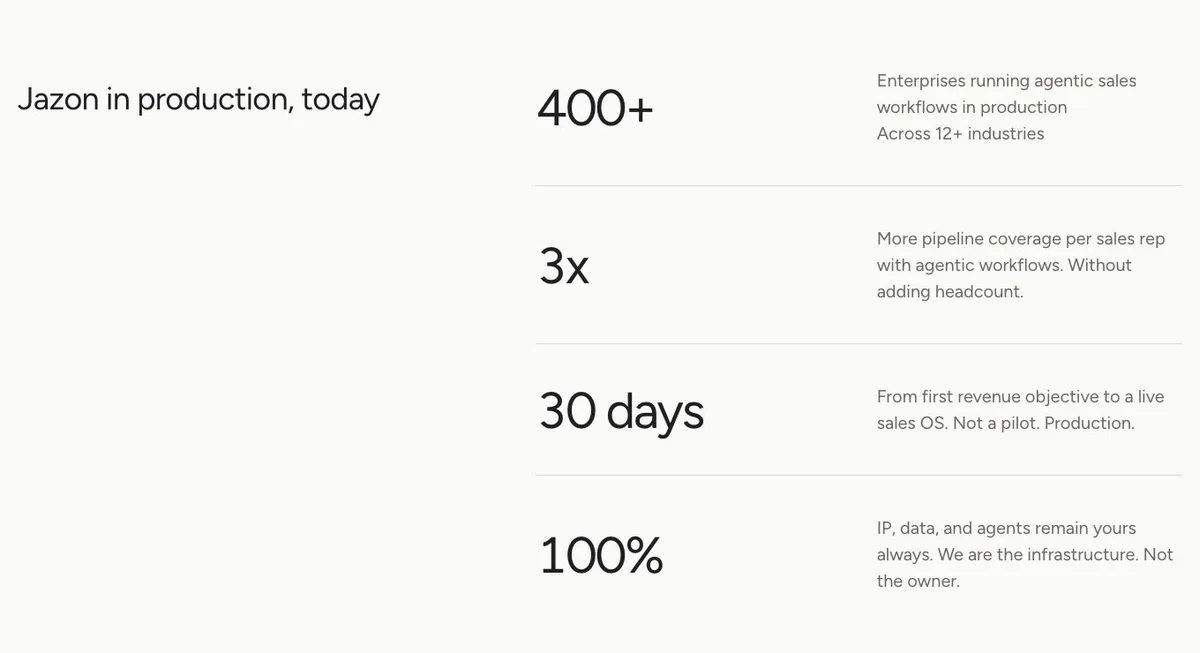
Numbers: "Jazon in production, today", with four big stats.
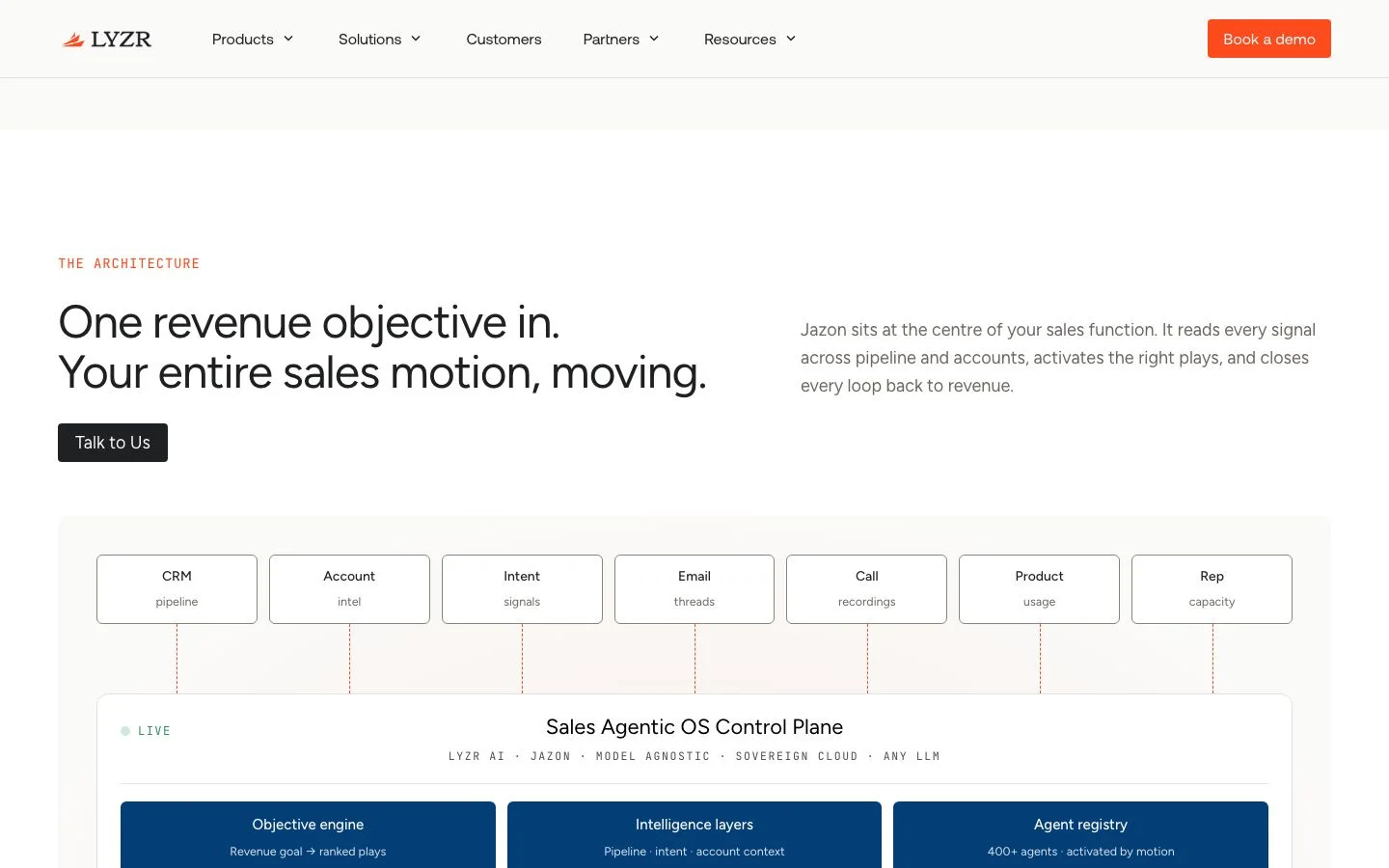
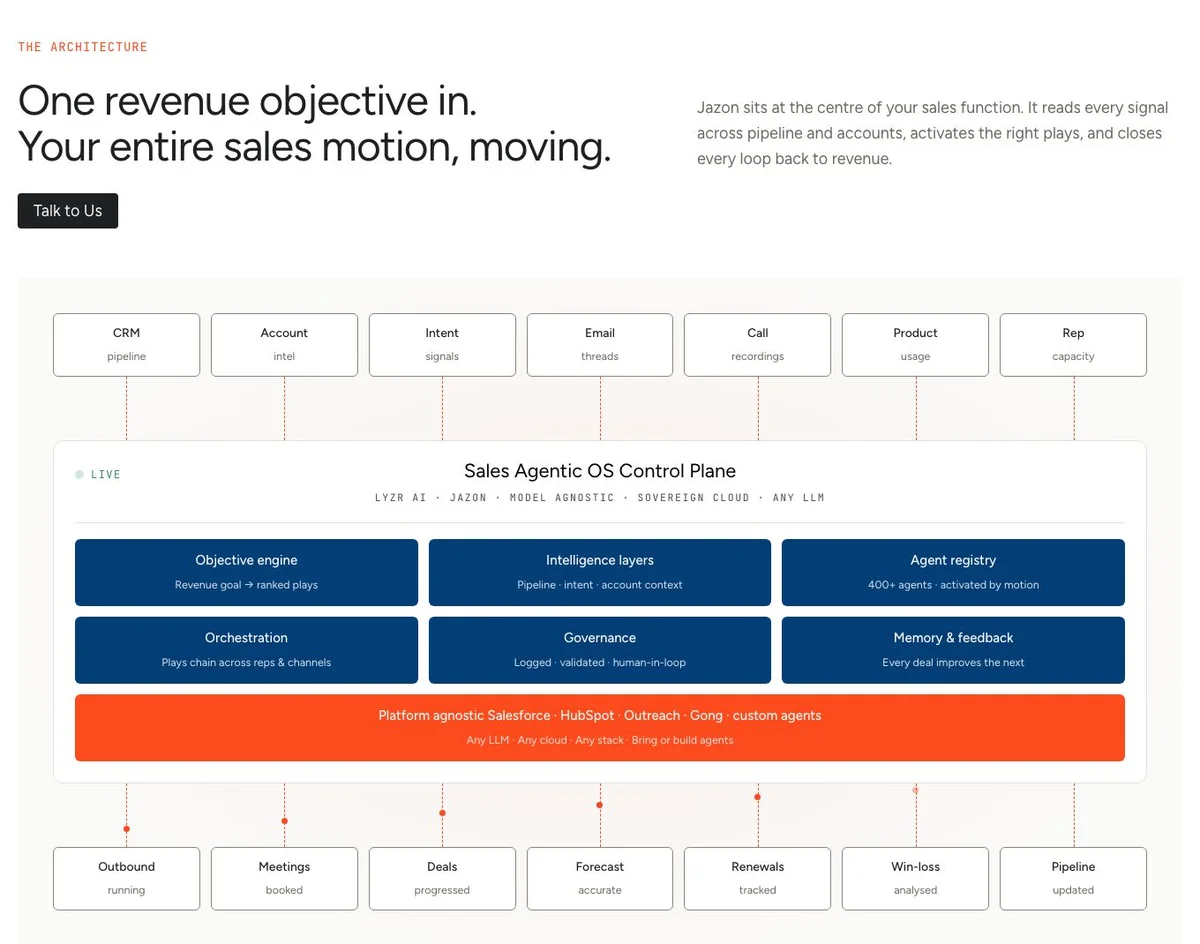
Architecture: a diagram of the "Sales Agentic OS Control Plane".
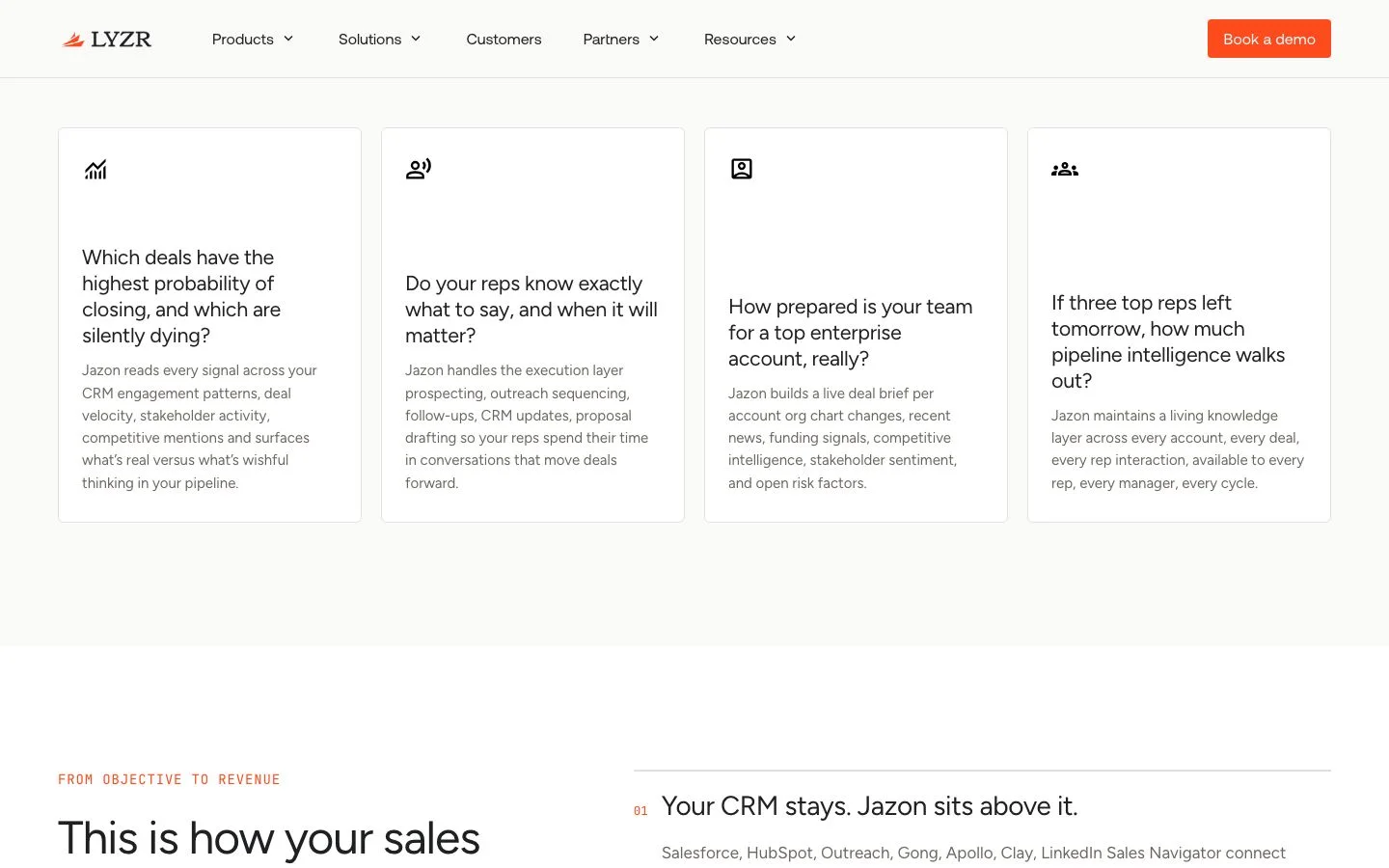
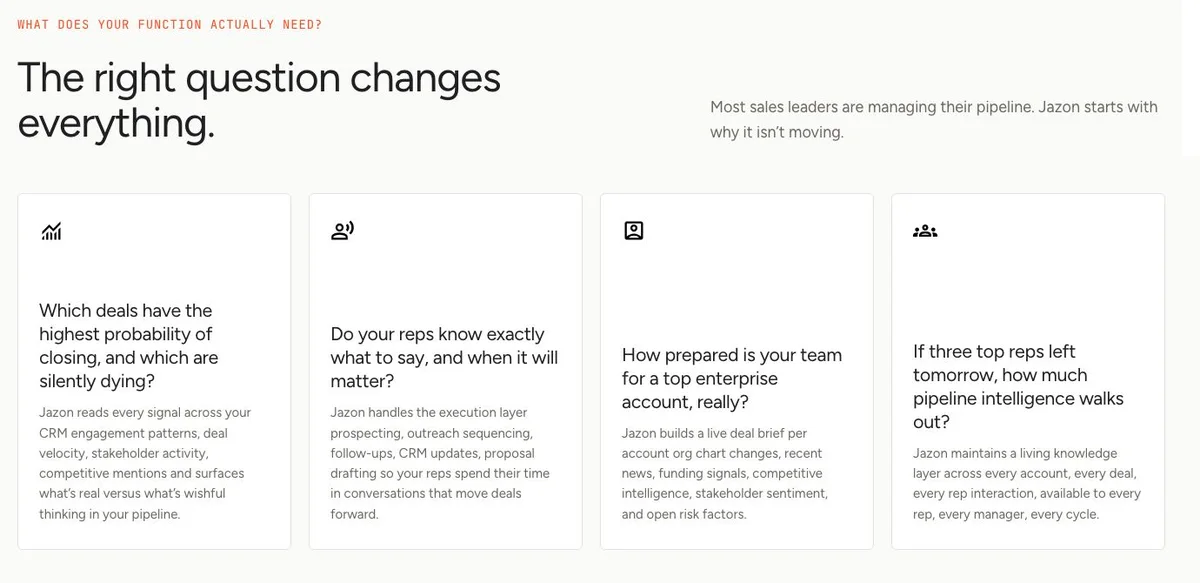
Questions: four cards with the questions sales leaders ask.
Transformation: four numbered steps, from objective to insight.
Use cases: a carousel of 12 sales workflows, from account research to renewals.
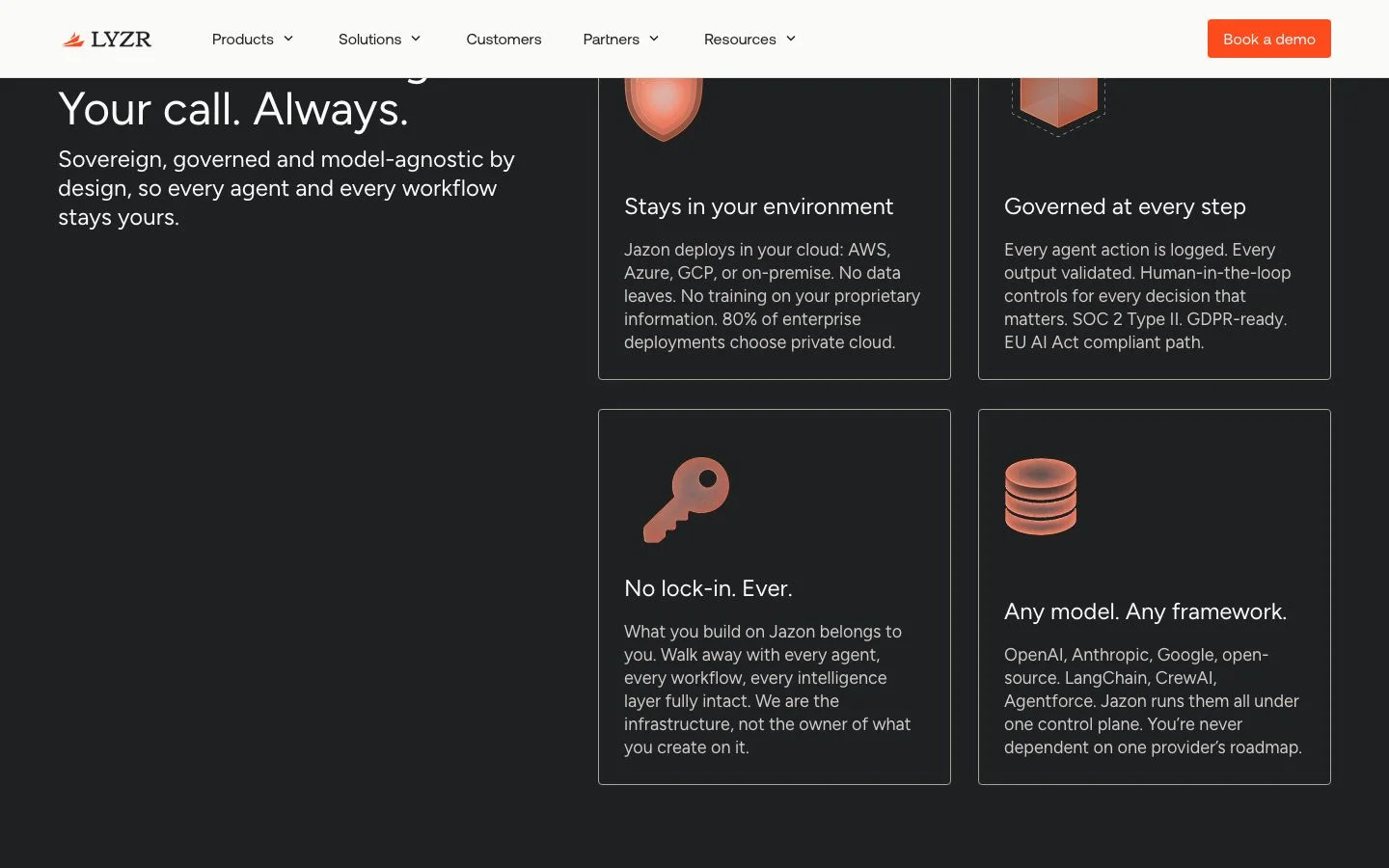
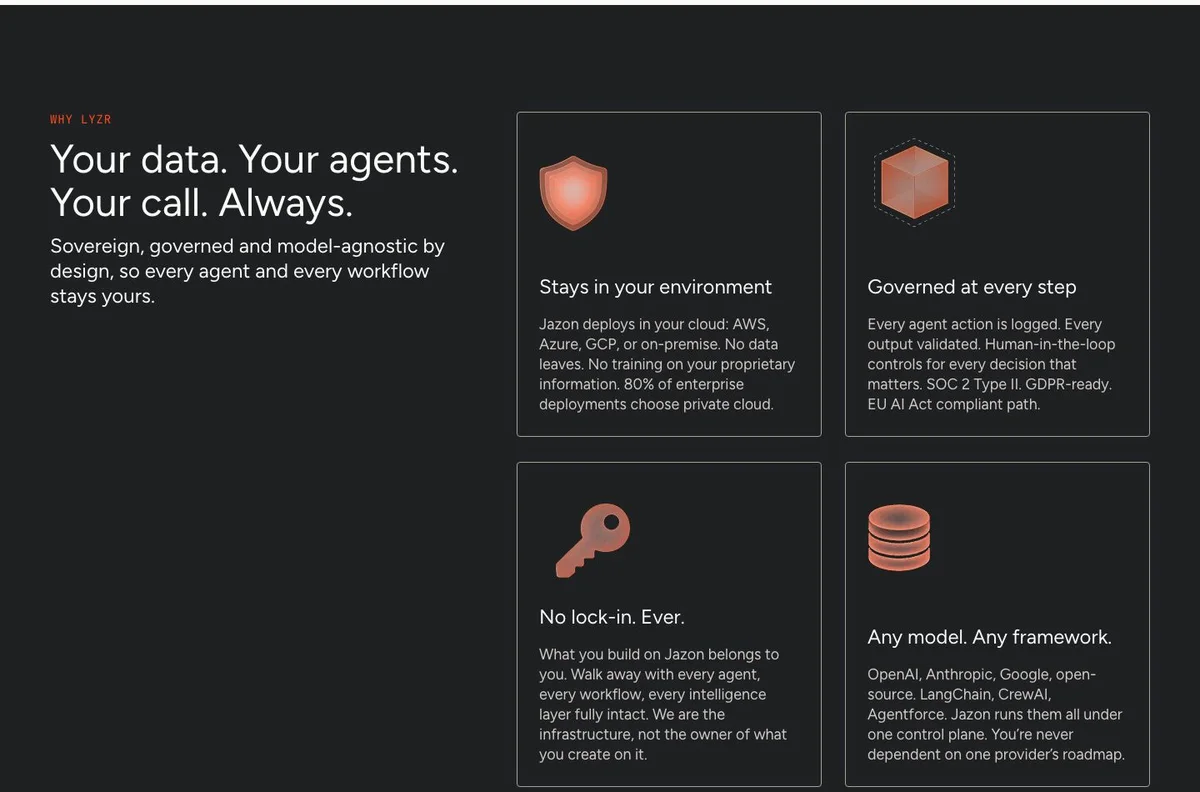
Ownership: a dark band, "Your data. Your agents. Your call. Always."
Testimonial, awards and security: proof for buyers and IT teams.
FAQ and final call to action.
Four numbers, each with a one-line explanation.
The architecture diagram is the product moment. Data sources run along the top, like CRM, intent signals and call recordings. They flow into a central control plane of navy blocks over an orange "platform agnostic" bar. Sales outcomes run along the bottom.
The control plane shows the product as a system.Each card starts with a question a sales leader would ask.
The page changes background color to mark a change of topic. Light sections hold the product story. The charcoal ownership band shifts to trust and control.
A dark band switches the story to ownership.
Proof and Trust
Proof comes in layers. A gray logo strip of enterprise customers sits right under the hero. Four big numbers follow, like "400+ enterprises running agentic sales workflows" and "30 days from first revenue objective to a live sales OS".
Customer logos sit right below the hero.
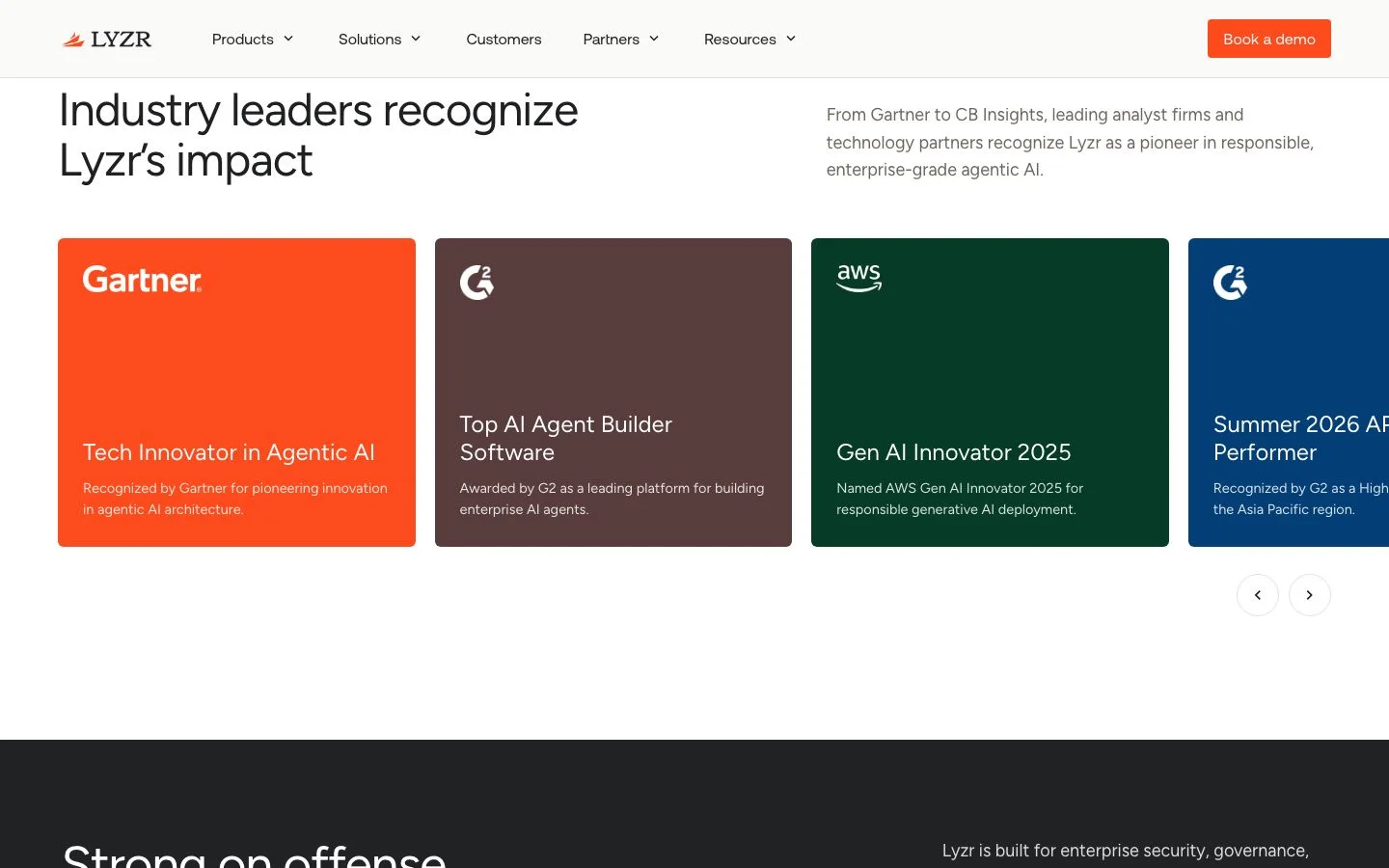
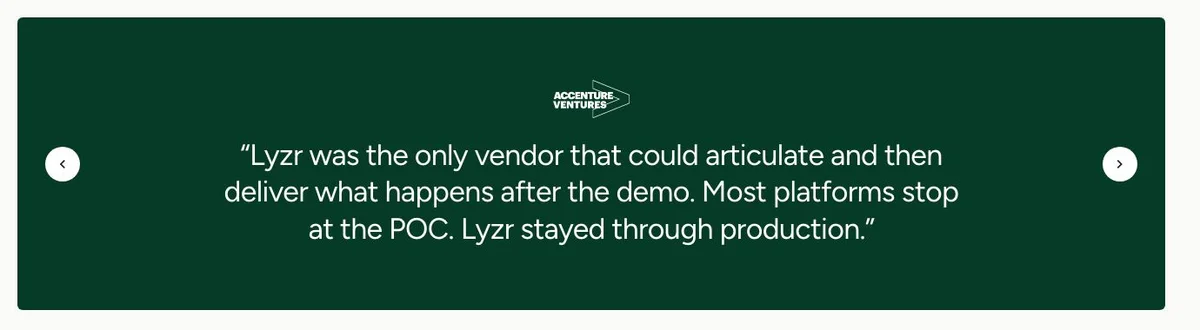
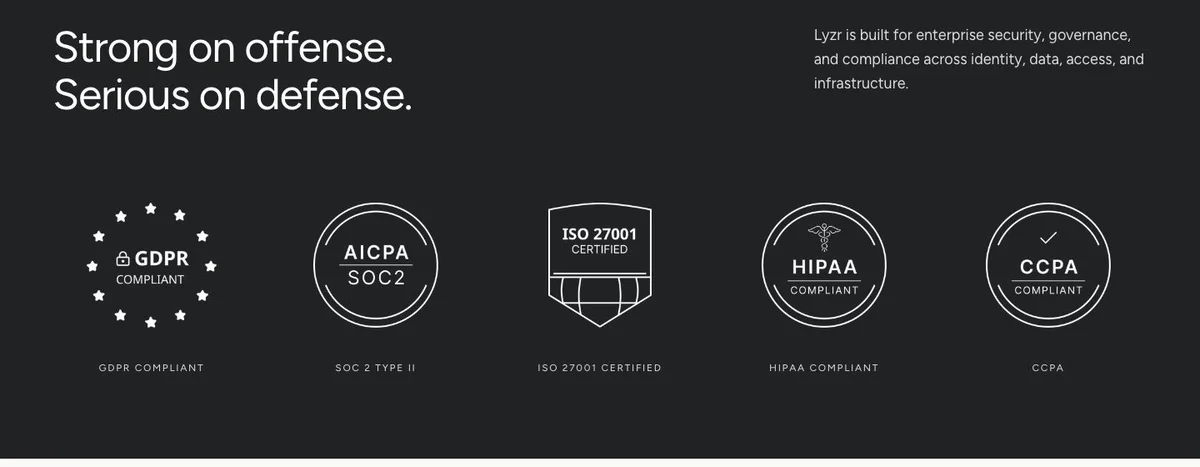
A forest green testimonial card quotes Accenture Ventures. Award cards from Gartner, G2 and AWS come next. A charcoal "Strong on offense. Serious on defense." band shows GDPR, SOC 2, ISO 27001, HIPAA and CCPA badges.
One quote, given a full green band.Compliance badges answer the IT team's questions.
Calls to Action
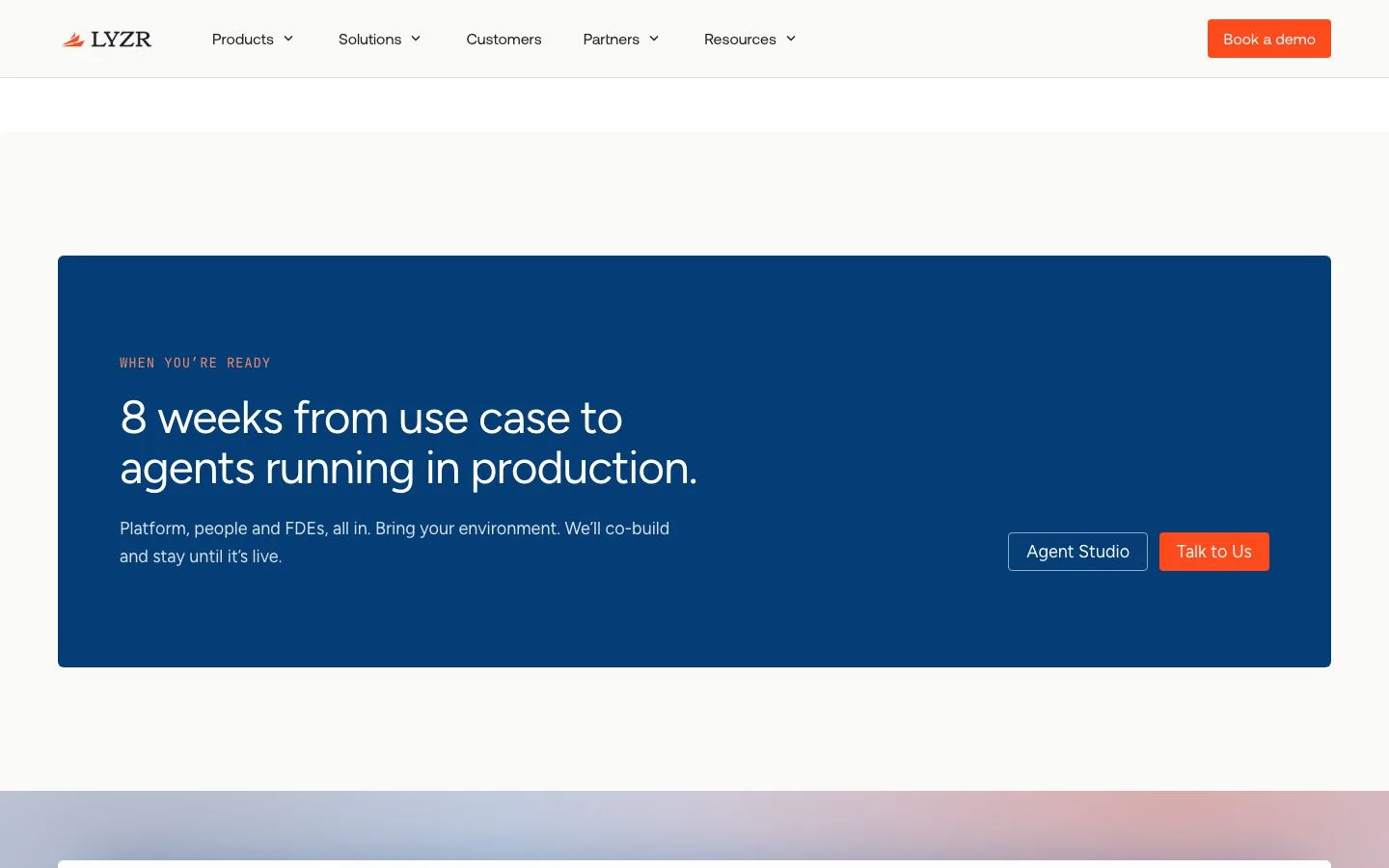
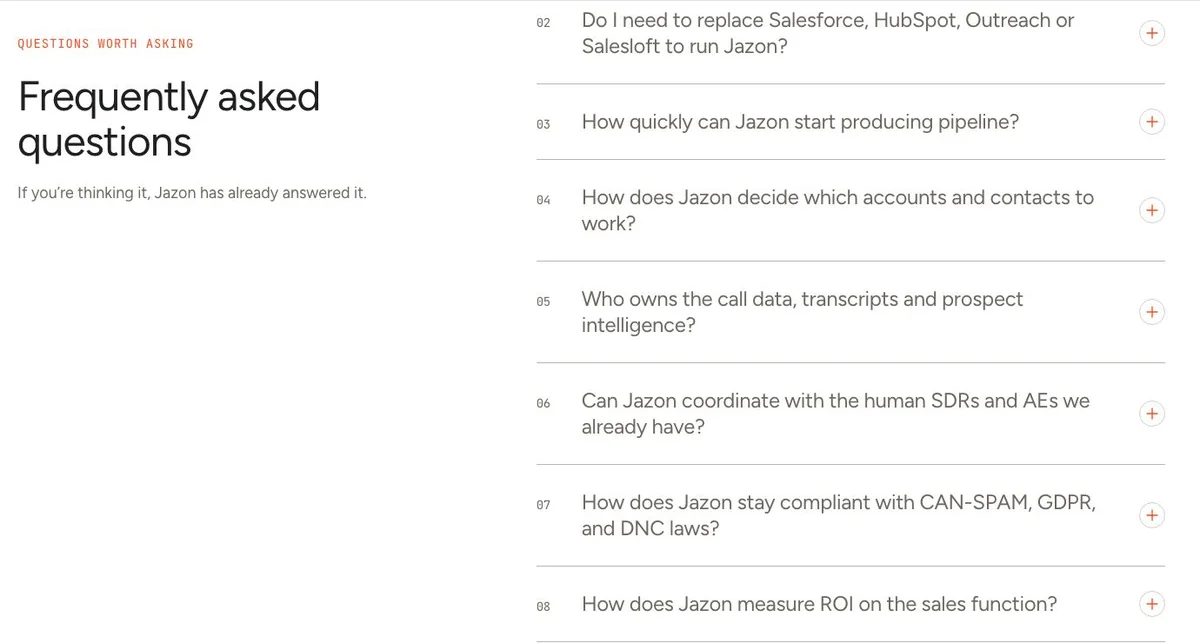
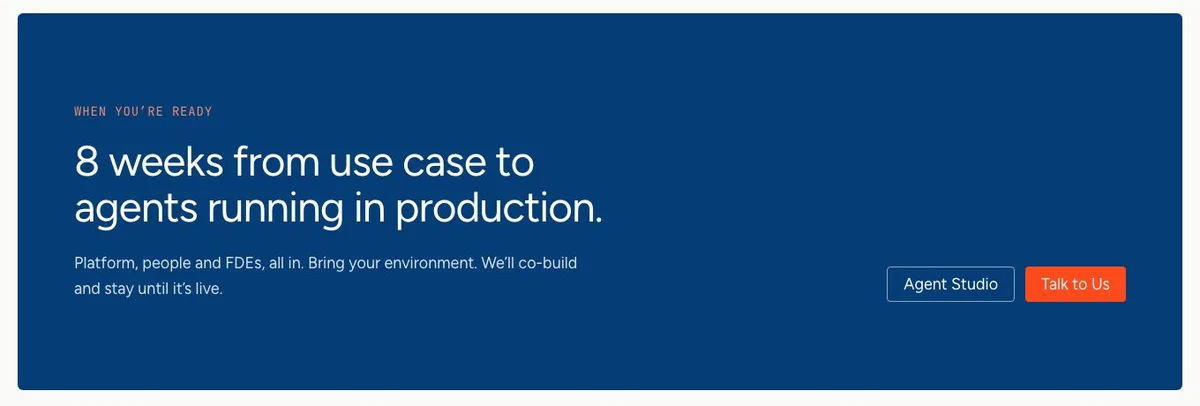
The orange "Book a demo" button stays in the sticky header the whole way down. In the page itself, the main button is a quieter black "Talk to Us", repeated after the hero and the architecture diagram. The final royal blue band, "8 weeks from use case to agents running in production", pairs an outlined "Agent Studio" button with an orange "Talk to Us". An FAQ with eight questions handles objections first.
Eight numbered questions handle objections.A blue band with a timeline and two buttons.
Imagery and Motion
The imagery mixes three styles. Stock photos of business people set a corporate tone in the hero. Diagrams in navy, orange and white show how the product works. Small 3D icons in coral, like a shield, a key and a stack of disks, light up the dark ownership cards. The diagrams do the most work, because they explain the product without screenshots.
What We Like
The Jazon page feels calm and enterprise-ready, like a consulting brief more than a startup pitch. Regular-weight type, warm off-white space and one orange accent keep a complex AI product easy to follow.
We like the architecture diagram most. Instead of a dashboard screenshot, it shows data flowing into a control plane and out as sales results. A revenue leader can see how Jazon fits their stack in one look.
We also like the order of the trust sections. Customer logos and numbers come first, then ownership, then the testimonial, awards and security badges. Each layer answers a different buyer's worry.
For a complex B2B product, a clear system diagram can sell more than a product screenshot.